


An Interview with Oscar Nominee and Stetson Alumni, Clint Bentley
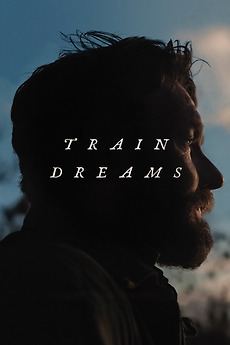
Earlier this year, the 98th Academy Award ceremony celebrated all of the best films that 2025 had to offer. For many in the film industry, this night is a dream come true, since even a nomination is enough to associate one’s name with prestige filmmaking. One such prestigious filmmaker is Stetson Alumnus Clint Bentley, whose most recent film, Train Dreams, established Bentley as a force of nature amongst his generation of directors.
Bentley graduated from Stetson University in 2008 with a Bachelor’s degree in English. Eight years after his graduation, he went on to write his first feature screenplay for the film Transpecos. In 2023, he gained critical acclaim for writing Sing Sing, the screenplay for which Bentley received his first Oscar nomination. Train Dreams, which is Bentley’s second feature film as director and fourth as writer, was nominated for Best Cinematography, Best Original Song, Best Adapted Screenplay, and, most notably, Best Picture.
Being an aspiring filmmaker myself, I find Bentley to be an inspiration for many reasons, so interviewing him for The Reporter is quite an honor. I chose to focus my interview on his creative process when crafting both Train Dreams and Sing Sing. Below is the transcript:
To start, what drew you towards adapting the novella Train Dreams? Is there anything about that story that spoke to you personally?
Yeah, there's a lot that spoke to me personally about it. I mean, I love Dennis Johnson, and I love Dennis Johnson's writing. There was a lot that felt evocative about it as a movie, you know? Like, it would be great in terms of translating it into cinema. Yeah, there was a lot about Robert Grainier's story that I felt a lot of connection towards. That story reminded me of the people I love.
I read online that you cited Terrence Malick as one of your inspirations for Train Dreams, which is evident given how contemplative and tender the film is. How do you balance inspiration from other artists with your own creative voice, both as a writer and as a director?
I think you just like, you know, you pull in all this inspiration as you go from other artists, from people on the streets, from nature, and it all kind of gets mixed up inside of you. You try not to think about it. You just try and make whatever you're gonna make, you know? But the inspiration, they're always there. All these masters have left their works behind for us. When you get into a jam and can't solve a problem, you can see how Kurosawa did it, or how Claire Denis did it. I totally just ripped off in my early short stories, Don DeLippo, and Cormac McCarthy, and Toni Morrison. That was me trying to find my voice, and you do that for a little while. Then you kind of move beyond that at a certain point, and it becomes your own style and your own voice. But really, it's how you learn. All artists do it. Eventually, your voice will become a culmination of all your inspirations. You just gotta wait it out.
Going back a few years, I’d like to talk about Sing Sing for a bit. That movie, I think, articulates the importance of art in such a beautiful manner. How has art, broadly speaking, impacted your own life?
It's hard to overstate it. It saved my life. It has changed the way I look at the world. Changed the way I look at myself. Changed the way I interact with the world. Made me a better person. You know, it’s hard to overstate it or explain it because I wouldn't be the person I am today without my favorite art, and I think for a lot of people, it's this way, you know? Where art themed us.
When adapting other people’s work, there’s a certain pressure to respect the original vision while still making it your own. How does that pressure affect your creative process? Do you find that pressure to be increased when adapting a true story, like with Sing Sing?
I just kind of let go of the pressure of it all and, just like with this one in particular, I just wanted to honor the spirit of the book. Um, and, but then also let the film become its own piece, you know, its own thing. That's it. You just kind of have to let go. But you still have to keep the spirit of it when you translate it.
With Sing Sing, there was a lot of responsibility that we felt around the film, just because of it not only being based on people's lives, but also being based on a real program that is very important. We took that responsibility very seriously and didn't want to have a negative impact on the work they were doing, you know, or cause trouble for them in any way. And then similarly with Train Dreams, where you're working with an incredibly deeply beloved novella, I just don't want to fuck it up.
How does it feel for your art to be so widely acclaimed?
It’s beautiful. You always hope that people will connect to whatever you put out there, you know? And so it's really, it's really special.
Do you have any advice for the aspiring filmmakers of Stetson University?
Yeah, and that's part of the reason that I was excited to chat. It sounds like you guys have maybe more in terms of film studies than I had when I was there. We didn't have a film program. There were very few classes that were film-focused. But the beautiful thing about Stetson was the support that I got from professors and from, of course, my friends. There's something very special about that school that you can pursue. There are a lot of professors there in programs that will allow you to explore the things you want to explore, even if they don't fit into a particular curriculum, right? The SURE grant, that was really, really helpful to me to make a documentary, which I'd never really made before. I made like short films with my friends, but never made something kind of serious like that. And then getting the encouragement of professors like Dr. Denner, Dr. Sitler, Dr. Kurlander, Dr. Eire, Dr. Farrell. In both the biology department and the English department, you can get a lot of support there, even if it's not a school with a film program. The thing I would say is just like, even as you're, you know, going through what you're going through as a writer and trying to write horror films and all that, just like, you know, focus on how you can get the work done. Because that's the only thing that's gonna take you anywhere.
Also, stick with your friends, and find your little tribe to make things with because film is a very collaborative medium. But even if you're not a filmmaker, even if you're a painter or a writer or whatever, like, you need your friends to help you figure out what you're trying to do. And then just focus on like doing the best work you can and always getting better and not getting stuck on your early projects because you got to make a lot of bad ones before you make the good ones. Just do it, get it done, you know, finish it, and then move on to the next one. You’ll get a little better each time.
Train Dreams can currently be viewed on Netflix. Go check it out; it’s a very good movie.
-Robin Pyle, '27


Comments